Welcome to vet-n-pet DIRECT
Main menu
-
Dogs
-
Cats
-
Horses
-
Farm
-
More Animals
- More Animals
-
Bird Supplies
-
Fish Supplies
-
Small Animals
-
Reptile Supplies
-
First Aid
-
Help
Your cart
Wildlife Supplies
42 products
42 products
Sort by:
- Featured
- Most relevant
- Best selling
- Alphabetically, A-Z
- Alphabetically, Z-A
- Price, low to high
- Price, high to low
- Date, old to new
- Date, new to old
- Artificial pouches for old, sick and orphaned animals
- Veterinarians: use on operating tables and in recovery rooms
- Reptiles: Place at one end of vivarium or enclosure so reptile can move on or off the heated area. Cover with layer of sand or flat rock
- Birds & Animals: Boxes and hospital cages. Place pad underneath or inside box or cage
- Dog & Cat Beds: Place underneath bedding and provide protection from chewing
This heater produces a temperature on the pad surface of about 20°C above room temperature
When room temperature is less than 10°C.
Animals should be as close as practicable to the pad surface.
When room temperature exceeds 10°C.
Animals should be insulated from the pad surface by inserting layers of woollen fabric between them and the pad. The thickness of insulation required will depend on the room temperature and should be adjusted so that the animal appears comfortable.
Measure the temperature where the animal rests with a thermometer. It should be between 25°C and 35°C, depending on the age and type of animal.
Seek professional advice if unsure of your animal's needs.
Young animals can rapidly suffer heat stress if the temperature is too high.
Heat Pad Measurements: 260mm x 360mm. Soft PVC Cover.
$2.75
Teats should resemble mothers in shape and length for mouth comfort, fit and correct tooth eruption. Marsupial teats get longer as the joey grows, so progression to longer teats is important. Individual carers will be able to decide which is the best for their individual animal.
Shapes and suggested uses below (scroll down to see a larger image of teat shapes):
STM - Small in-pouch kangaroos, wallabies, possums
MTM - In-pouch kangaroos, wallabies, koalas
TM - Out of pouch kangaroos and wallabies
FM - Out of pouch kangaroos, wombats, koalas
SD - Small dogs, possums, gliders
LD - Large dogs, possums, wombats, koalas
C - Cats, rabbits, carnivorous marsupials
F - Flying fox, some breeds of dog
P - Small mammals, cats, rabbits
D - Deer, 26mm finish to fit larger bottles
Wombaroo Latex Teats are handmade with natural latex using hand cast moulds. For example 40 different moulds are used in the manufacture of the FM size teat. As such some minor variation between teats can be expected which in no way affects the quality of the product.
From $9.95
Complete food for rearing or supplementing insectivorous or carnivorous birds.
Includes raptors, sea birds, waders, cardinals, chats, fly catchers, kingfishers, magpies, tanagers, wrens, whistlers, woodpeckers and woodswallows.
Pack Weight: 250g; 1kg; 5kg
From $16.95
Wombaroo Kangaroo Milk Replacer is suitable for all species of macropods including kangaroos, wallabies, pademelons, bettongs and potoroos.
Wombaroo contains a blend of protein, carbohydrate, fat, vitamins and minerals formulated to match as closely as possible the composition of natural mother's milk.
Four stages of kangaroo milk are available (sold separately). The stage required is dependent on the developmental stage of the joey.
The illustrations on the front of each packet provide a visual guide in determining the milk type to be used.
SIZES:
220g ; 1.1kg, 5kg;
(220g makes 1L milk)
From $12.95
ABOUT FEEDING INSECTS:
Insectivorous species kept in captivity usually lack the diversity and quality of a natural diet in the wild. Feeder insects are often maintained on nutrient-poor substrates (eg bran), which can lead to dietary deficiencies. Insects have no skeletal structure and are therefore a poor source of calcium.
IMPROVING INSECT NUTRITION:
By maintaining the live feeder insects on Insect Booster, the nutritional value of the captive diet is significantly enhanced. This provides a means of supplying essential amino acids, essential fatty acids (omega 3 & 6), vitamins, minerals and colour-enhancing carotenoids. Supplying nutritionally improved feeder insects maintained on Insect Booster is more effective than simply "gut-loading" insects raised on inadequate diets.
Test Results after using Insect Booster showed that calcium levels and the calcium to phosphorus ratio were significantly improved. This is a more effective method of supplying calcium than dusting insects with calcium powder. The levels of other minerals, vitamins and colour-enhancing carotenoids were also significantly improved.
DIRECTIONS FOR USE:
For best results, supply insect booster to the feeder insects for at least 14 days prior to feeding animals. Moisture should always be available to insects and can be supplied as a piece of wet sponge, fruit or vegetable.
Adult Insects (crickets & woodies): Supply Insect Booster as a dry powder in a shallow bowl or plate. Insect Booster is a complete diet and does not require other foods to be added.
Juvenile Insects (mealworms & fly pupae): Make a 50:50 mixture of Insect Booster with bran and supply as the substrate in which the pupae live.
Ingredients: Pollard, whey & soy proteins, methionine, vegetable oils, omega-3 & omega-6 fatty acids, vitamins, minerals & carotenoids.
SIZES: Available in 300g & 5kg.
$3.95
Directions for use:
Using a blade, cut a smallX into the artificial nipple. The larger the opening you make determines the flow of liquid released.
Bottle volume: 120mL
From $17.95
This is Wombaroo Possum Milk Replacer >0.8: For joeys with greater than 80% of pouch life completed. Fur short soft to dense long. Spends time out of pouch. Faeces toothpaste to soft then firm green pellets.
SIZES: >0.8 : 250g; 1.25kg
(250g makes 1L)
$34.95
Made by Australia's leading manufacturer exclusively for you.
High grade for your high flyer.
SIZE: 20kg
$18.95
Wombaroo Glider Nectar is a balanced diet for gum and nectar-eating species including Sugar Gliders.
Key Features:
• Nutritionally Balanced – Provides a full range of vitamins, minerals and essential nutrients in line with published guidelines for Sugar Gliders (Dierenfeld & Whitehouse-Tedd, 2018).
• Soluble Fibre – Contains acacia gum and pectin as sources of soluble fibre to improve gut health and faecal consistency.
• Prebiotics – Inulin and Actigen prebiotics to help promote healthy gut bacteria.
From $12.95
Nutrient enhanced hand rearing formula for all parrots, pigeons, doves and finches. Passwell Hand Rearing Food makes up as a smooth, creamy consistency, ideal for crop-feeding.
This high quality Australian-made product is more economical than expensive imported brands.
Available sizes: 300g, 1kg
$12.95
Wombaroo Flying Fox Milk Replacer is a nutritionally balanced milk substitute for orphaned flying fox (fruit bat) pups.
Key Features:
- Specifically formulated to match the composition of flying fox milk
- High protein to energy ratio for lean muscle growth.
- Calcium for bones.
- Stabilised Vitamin C, for proper growth of skin & joints.
Feeding Guidelines:
Flying fox pups are born nearly fully-furred and with eyes open. Keep pups in a clean, draught-free environment at about 30°C. Success in hand-rearing greatly improves if pups receive colostrum at birth. Pups that don’t get colostrum from the mother can be fed Impact Colostrum Supplement. Commence feeding Wombaroo Flying Fox Milk Replacer after the initial feeds of colostrum.
Making up Milk:
To make 100mL of milk: Mix 14g of powder (2 scoops) with 90ml of warm water.
To make 1 litre of milk: Mix 140g of powder with 900ml of warm water.
Add about half of the water to the powder first and mix to a paste. Then add the remaining water and mix thoroughly. Pre-boil the water to ensure that it is sterilised. If the water is too hot it can cause the milk to curdle. If it is too cold then it will be difficult to disperse the powder. Wombaroo contains elevated protein levels, so the milk needs to be well mixed to prevent it from separating out. An electric whisk can be used for mixing. Milk can be stored in the fridge for a day or can be frozen for up to two weeks. It is useful to make up milk in larger quantities and store it frozen in small portions (eg ice cube trays), so that the required daily feed volumes can be easily thawed out. Once thawed out, discard any unused milk, and wash feeding utensils thoroughly.
Feeding:
Warm milk to about 35°C. Feed from either a bottle and teat or a 10mL syringe with teat pulled over the end. A Wombaroo F Teat is recommended, as this replicates the natural shape of a flying fox nipple. Feed 6 times per day for the first week, 5 times per day for week 2, reducing this to 4 times per day by week 3. Stimulate pups to defecate and urinate after each feed. To avoid dehydration during periods of hot weather provide drinks of pre-boiled water between feeds. Always offer drinking water once pups become mobile. Consult your veterinarian or specialist wildlife carer for particular advice about caring for flying fox pups.
SIZE: 140g
From $10.95
This is a granular powder that is a complete balanced diet for pet, aviary or wild lorikeets. The product can be fed dry, straight from the pack, or mixed with the desired quantity of water to produce a wet mix.
Remove soiled or uneaten food daily and replace with fresh food. Some lorikeets will load their drinking water with dry food so always ensure that fresh water is available.
SIZES: 500g; 1kg; 5kg
From $24.95
**New Packaging is rolling out mid 2024! You may receive a mix of old and new packaging as the transition completes***
Di-Vetelact is an Australian made powdered milk formula suitable for all kinds of animals. The premium grade ingredients are sourced from Australian and New Zealand dairy farms.
Di-Vetelact is a nutritionally complete powdered milk replacer and nutritional supplement. It is scientifically formulated with the optimum ratios of fatty acids, important amino acids and 13 high quality vitamins and 12 minerals.
Di-vetelact provides premium nutrition for sustained growth, development and vitality of animals from infancy through to senior years.
SUITABLE FOR
- Dogs, Cats, Horses, small pets such as Rabbits and Guinea Pigs as well Farm Animals and Marsupials
- Infant and Growing Animals
- Pregnant and Lactating Animals
- Elderly and Convalescing Animals
- Show and Performance Animals
- All animals at all life stages to ensure best health
Ingredients:
Di-Vetelact Special Low Lactose Dairy Blend (Whey protein concentrate, milk protein concentrate) Dried Vegetable oils (vegetable oils, glucose solids, lecithin and emulsifiers. mixed tocopherols).
Vitamins, Minerals and other: Calcium, Phosphorus, Magnesium, Sodium chloride, Potassium, Vitamin C, Taurine, Vitamin E, Iron, Vitamin B3, Zinc, Vitamin A, Pantothante, Vitamin D3, Copper, Vitamin B12, Vitamin K1, Vitamin B2, Manganese, Vitamin B1, Vitamin B6, Iodine, Folate, Biotin, Selenium
SIZES: 375g; 850g; 5kg
From $25.95
ABOUT LOW LACTOSE MILKS
Low lactose milk products are normally prepared from cow's milk using the enzyme lactase to convert milk lactose into its component sugars, glucose and galactose. This process does not alter the nature or composition of protein or fat in cow's milk, which can be quite inappropriate for other mammal species.
Milk protein is composed of two main fractions, casein and whey protein. Cow's milk protein contains about 20% whey protein. Protein in the milk of animals such as puppies, kittens, foals, piglets and marsupials contains up to 50% whey protein. Whey protein has more essential amino acids than casein so products made simply from modified cow's milk are likely to be nutritionally deficient for other species.
The fat in cow's milk is about 40% unsaturated and 60% saturated. Cow's milk is also low in several essential omega-3 fatty acids. Fat in the milk of many other animals can be up to 65% unsaturated and contain high levels of linolenic acid, an important omega-3 fatty acid.
Formula One is a superior low lactose milk product for more animals because:
Formula One is made from individual ingredients blended together to produce a milk that is low in lactose yet contains more whey protein, unsaturated fat and omega-3 fatty acids than lactase modified cow's milk products.
Formula One contains added taurine, an essential nutrient for cats, about 50% whey protein and 65% unsaturated fat of which some 10% is omega-3 fatty acids.
$2.50
Fits the Wombaroo Latex Teats.
Plastic bottle only. Teats sold separately.
$15.95
Wombaroo Kangaroo Milk Replacer is suitable for all species of macropods including kangaroos, wallabies, pademelons, bettongs and potoroos.
Wombaroo contains a blend of protein, carbohydrate, fat, vitamins and minerals formulated to match as closely as possible the composition of natural mother's milk.
Four stages of kangaroo milk are available (sold separately). The stage required is dependent on the developmental stage of the joey.
The illustrations on the front of each packet provide a visual guide in determining the milk type to be used.
SIZE: 140g; (Makes 1L milk)
From $15.95
Koala Milk Replacer Early Lactation is a nutritionally balanced milk substitute for koala joeys less than 160 days old.
Joeys at this stage are furless, or with fine fur first appearing from around 90 days of age. Eyes are closed or just beginning to open from around 150 days of age. Completely confined to the pouch, but may poke head out occasionally.
Key Features
- Specifically formulated to match the composition of early lactation koala milk.
- Moderate energy milk, with a balance of carbohydrate & fat content.
- Protein high in sulphur-containing amino acids (cysteine & methionine) for the onset of hair growth.
Making up Milk:
To make 100mL of milk: Mix 22g of powder (3 scoops) with 85ml of warm water.
To make 800mL of milk: Mix 180g of powder with 700ml of warm water.
SIZES: 180g; 900g
$9.95
Lectade Sachets when reconstituted as directed provide an oral rehydration therapy containing a balanced mixture of glucose, glycine and electrolytes with the added advantage of being a non-antibiotic oral supportive treatment.
Once diluted Lectade Solution is isotonic, ensuring glucose and glycine are actively absorbed by the intestinal tract, causing water and sodium to be absorbed simultaneously with these nutrients and resulting in a high degree of rehydration in scouring and dehydrated animals.
Where specific disease control (i.e. antibiotic therapy) is indicated, it can be administered in conjunction with Lectade Solution.
Indicated for:
- Diarrhoea
- Dehydration (simple or associated with diseases such as canine parvovirus and feline panleucopaenia)
- Post travelling stress and dehydration
- Post-surgical or disease convalescence
- Concomitant treatment of viral or bacterial scours
Directions for Use:
For oral treatment only.
Sections A and B must always be used together when preparing Lectade Solution.
Add the contents of section A and B of one Lectade Sachet to 2 litres of warm water, stir until dissolved.
To make 500 mL of Lectade Solution: using a 5 mL medicine spoon add 1 level spoonful of section A and 3 heaped spoonfuls of section B to 500 mL warm water, stir until dissolved, store remainder of powder in a dry place.
Most dogs find Lectade Solution palatable and will drink it voluntarily. Palatability for cats is variable.
Lectade Solution may also be administered orally via syringe.
Continue treatment for 1 to 2 days after the animal appears clinically recovered and is feeding normally.
Dosage Guide:
Dogs
Miniature - 125 mL, 2 to 3 times daily
Medium - 500 mL, 2 to 3 times daily
Small - 250 mL, 2 to 3 times daily
Large - 750 mL, 2 to 3 times daily
Cats
125 mL, 2 to 3 times daily
Foals
1-2 L, 2 to 3 times daily
Give by drenching bottle or stomach tube
Calves
1 L/10 kg bodyweight daily, divided into 2 or more doses
1.5 L/10 kg bodyweight daily initially if dehydration is severe, divided into 3 or more doses
Scouring Calves: As soon as signs of scours are seen withdraw milk or milk replacer and feed the required dose of Lectade Solution for 2 days. For the next 2 days return to feeding milk at half the rate and, either separate to or mixed with, an equal amount of prepared Lectade Solution. Return to full milk feeding thereafter
Bought-in or Stressed Calves: Feed 2 L of Lectade Solution instead of milk as the first feed on arrival. For the next feed use 1 L milk or milk replacer mixed with 1 L Lectade Solution. Return to full milk feeding thereafter. Adequate colostrum must be fed to calves within 48 hours of birth.
Pigs
A litter of 1 week old piglets will consume approximately 2-3 L per day
A weaner pig will consume approximately 1-2 L per day.
Lectade solution should be made available for 4 days. If there has been some improvement after 4 days, but the scour has not cleared completely, treatment may be continued for up to 8 days in total.
Suckling Piglets: Immediately scour symptoms show, fresh Lectade solution made up as directed should be made available, in a cube drinker or similar clean vessel, to the whole litter.
Weaned Pigs: If these pigs are showing signs of scour, make fresh Lectade solution available in a suitable clean vessel, cube drinker, trough or drum with nipple drinker
Lambs
150 mL of Lectade solution 3 times daily is a suitable dosage regimen. Lectade solution made up as directed should be administered orally to scouring or dehydrated neonatal lambs by drenching bottle or stomach tube
Withholding Period: Nil
Pack size: Sold as single 64g sachets. If you wish to purchase a box, there are 12 sachets in a box.
$19.95
Crittacare Herbivore was formulated by veterinarians to provide nutritional support for sick, stressed, injured and debilitated small herbivorous animals. It should be used when these animals are not eating voluntarily.
This product is high fibre, low fat, low sugar and contains vitamins, minerals, calcium and essential amino acids, stabilised Vitamin C, probiotics (to maintain gut function) and zeolite (a natural toxin absorber). It is extrusion cooked for safety and digestibility.
Crittacare Herbivore has a long shelf life. Expiry: 2 years from date of manufacture.
PACK WEIGHT: 350g
From $9.95
A powder that forms a liquid nectar when mixed with water and is a balanced maintenance food for lorikeets and honeyeaters. The food is made by adding 300g of powder to 500mL of warm water, mixing well then making up to 1 Litre with water. Prepared food may be stored frozen.
Pack size: 300g, 1.5kg, 4.5kg
From $75.95
Directions:
Reconstitute diet using warm water to achieve the desired consistency. An average Short-beaked Echidna (body weight 4kg) generally requires 30g of Vetafarm Complete Echidna Diet mixed with 90-120g of water to meet daily energy requirements.
Vetafarm Complete Echidna Diet can be introduced to puggles by mixing into milk replacer, as soon as they are ready to eat solid food and can be used immediately on adult echidnas being rehabilitated for release. For best results when transitioning an echidna from a previous diet, Vetafarm Complete Echidna Diet should be introduced slowly, decreasing the percentage of the old diet by 10% daily until the echidna is only eating Vetafarm Complete Echidna Diet.
Ingredients:
Kangaroo meat render, corn, potato starch, roughage.
Vitamins: A, B1, B2, B3, B5, B6, B9, B12, C, D3, E, H and K.
Minerals: calcium, cobalt, copper, iodine, iron, magnesium, manganese, phosphorus, potassium, selenium & zinc.
SIZES:
2kg;
10kg
From $11.95
Wombaroo High Protein Supplement is used to boost protein content in the diet of fruit & nectar eating animals including Sugar Gliders, Possums & Flying Foxes.
Key Features of Wombaroo High Protein Supplement:
- Over 50% protein, which is more than twice that of high protein cereal.
- Protein has an excellent amino acid profile, superior to that of plant pollen.
- Enriched with essential nutrients including omega-3&6 fatty acids, vitamins and minerals.
- A useful food additive for sick or debilitated animals.
Use as a dry powder: add directly to moist foods such as diced fruit & pureed vegetables and mix in well.
Use as liquid solution: add 10g (2 heaped teaspoons) Wombaroo High Protein Supplement to 30mL warm water, and mix well. Pour over dried foods including fruits, nuts, biscuits or kibbles.
Feeding guidelines:
Frugivorous (Fruit-eating) Animals:
Fruit may represent a large proportion of the diet for some animals and birds. To ensure there is sufficient quality protein in their diet, disperse 10g (2 heaped teaspoons) of High Protein Supplement over 100g of fruit.
Possums & Gliders:
For animals that eat fruit & vegetables, disperse 10g (2 heaped teaspoons) of High Protein Supplement over each 100g of fruit & vegetables offered.
For animals fed plain biscuit, cookie or kibble, add 10mL of High Protein Supplement Solution per 25g of dry food offered.
For insectivorous species (eg Sugar Gliders, Pygmy Possums) also include up to 20% of prepared Wombaroo Small Carnivore Food in their diet.
Flying Foxes:
Disperse 10g (2 heaped teaspoons) of High Protein Supplement over 300g of fresh cut apple per adult animal. Increase the amount to 20g (4 heaped teaspoons) per animal when feeding pregnant or nursing females, juveniles or debilitated animals.
Other Uses:
Wombaroo High Protein Supplement can be substituted for the High Protein Cereal used in many food recipes for animals and birds. Use only half the quantity of High Protein Supplement because of its superior protein quality and higher concentration.
$39.95
Roo Food is a nutritious diet formulated to be fed to kangaroos and wallabies. It is a complete diet that requires no other supplementary feeding other than roughage and clean, fresh water.
Feeding Recommendations:
Feed Roo Food ad lib. along with roughage.
Introduce Roo Food gradually and avoid sudden changes to diet as digestive problems may occur. If digestive problems occur reduce the amount of Roo Food being fed and increase roughage consumption until normal digestive activity returns.
Roughage and clean, fresh water must be available at all times.
Ingredients:
Roo Food is formulated from a selection of the following ingredients: Clover, lucerne, barley, wheat, triticale, oats, rice, peas, lupins, lentils, beans, soyabean, canola, sunflower and products derived from these ingredients. Vegetable oil, lignin, limestone, di-calcium phosphate, magnesium oxide, gypsum, salt, bentonite and antioxidants.
Vitamins: A, D3, E, thiamine (B1), riboflavin (B2), pantothenate (B5), pyridoxine (B6), B12, folic acid, biotin and choline.
Minerals: Calcium, phosphorus, sodium, chloride, cobalt, copper, iodine, iron, manganese, selenium and zinc.
SIZE: 20kg
From $14.95
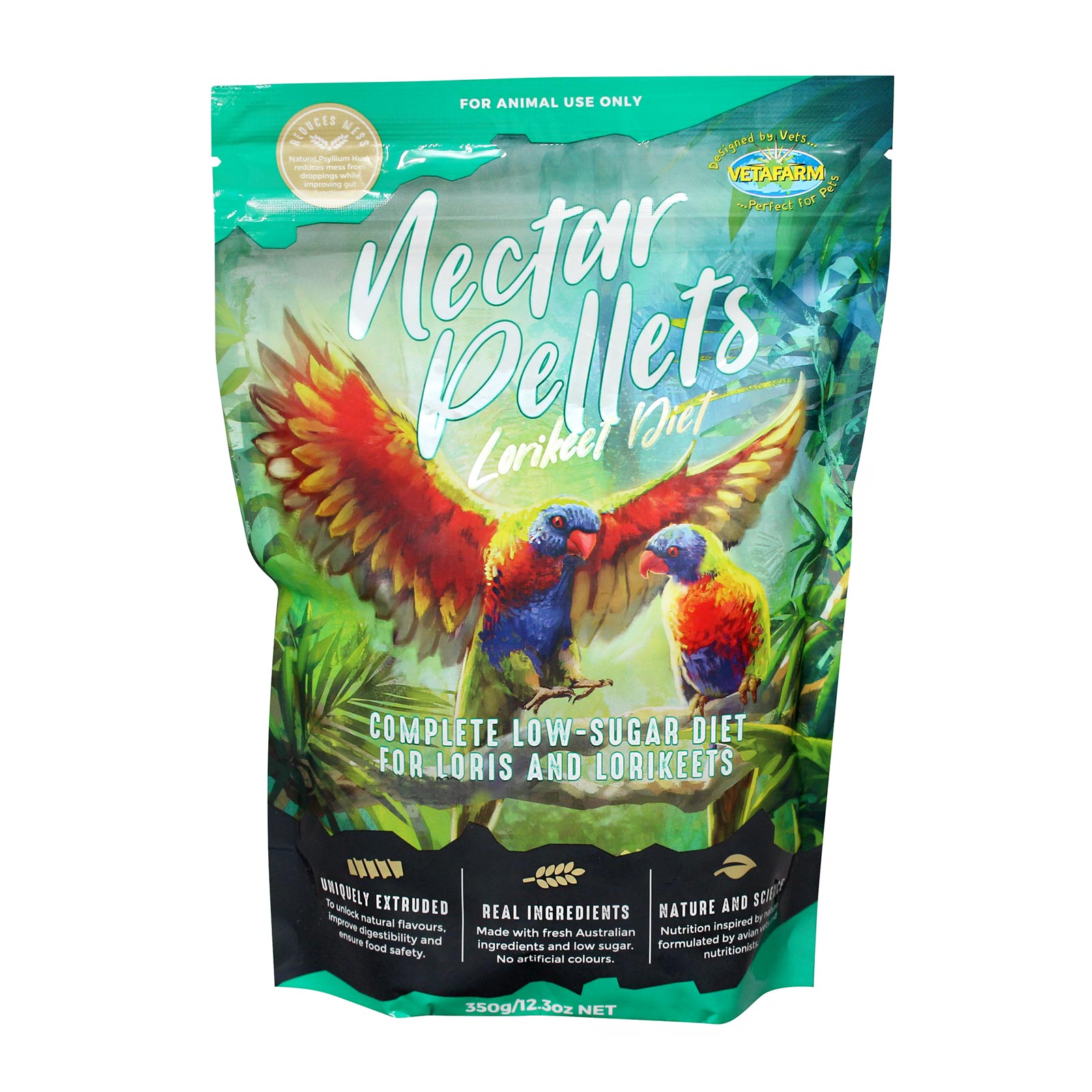
Vetafarm Nectar Pellets are a complete and low-sugar diet for loris and lorikeets.
Nectar pellets have been formulated to provide complete nutritional balance for growth, breeding, brain function and optimum feather development when fed as 80% of your birds diet. The remaining 20% of the diet should consist of a combination of fresh fruits and vegetables (15%) and selected treats such as nectar mixes (5%).
Directions:
Loris and lorikeets eat between 10-15% of their bodyweight in dry food per day. A 120g bodyweight lorikeet requires a minimum of 10g of nectar pellets per day.
Pack size: 350g, 2kg, 10kg
From $13.95
Lorikeets are the lovable lunatics of the bird world.
Vetafarm have formulated a specific diet for lorikeets, replicating their pollen, fruit and nectar diets of the wild.
Made fresh, using only the highest quality ingredients, Wild Earth is packed with the natural goodness of bee pollen, fresh fruits, a range of low GI carbohydrates as well as balanced vitamins, minerals and organic acids.
From $17.95
This is Wombaroo Possum Milk substitute < 0.8 for possum & glider joeys with less than 80% of their pouch life completed.
Joeys at this stage have furless pink skin to fine fur, eyes closed to just opened and ears drooped, or starting to become erect. Joeys are fully pouch-bound and totally dependent on milk. Faeces are yellow custard to toothpaste consistency.
Key Features:
- Formulated to match the composition of early to mid lactation possum milk.
- Moderate energy milk, balancing carbohydrate & protein with a relatively low fat content.
- Protein high in sulphur-containing amino acids (cysteine & methionine) to promote good hair growth.
- Makes up to 1L
Pack Weight: 160g
From $17.95
Wombaroo Kangaroo Milk Replacer > 0.7 is for joeys with greater than 70% of pouch life completed. Fur short to dense. Spends time out of pouch. Faeces soft to firm green pellets.
Wombaroo Kangaroo Milk Replacer is suitable for all species of macropods including kangaroos, wallabies, pademelons, bettongs and potoroos.
Wombaroo contains a blend of protein, carbohydrate, fat, vitamins and minerals formulated to match as closely as possible the composition of natural mother's milk.
Four stages of kangaroo milk are available (sold separately). The stage required is dependent on the developmental stage of the joey.
The illustrations on the front of each packet provide a visual guide in determining the milk type to be used.
(250g makes 1L milk)
From $19.95
Wombaroo Echidna Milk Replacer Late Lactation (formerly called >30) is a nutritionally balanced milk substitute for echidna young greater than 50 days of age.
Finely-furred with spines just emerging to fully-spined. Faeces toothpaste consistency to soft then firm pellets.
Key Features
Specifically formulated to match the composition of later lactation echidna milk.
Very high energy (fat) content milk to cater for infrequent feeding intervals.
High in protein to coincide with peak growth rate.
Low in carbohydrate to avoid digestive upset and fermentation of milk in the gut.
Also suitable for young platypus.
Feeding Guidelines:
Echidna milk composition changes significantly as the young ages. Echidna Milk Replacer Late Lactation is specially formulated for older juveniles, when they would normally be deposited in the burrow (greater than 50 days of age). At this stage they are growing spines, and rapidly increasing in body weight. These animals require a high energy (fat) milk to cater for infrequent feeds, and large quantities of protein for growth. Note that age estimation of echidnas based on body length or weight becomes inaccurate after 50 days of age.
Success in hand-rearing furless echidnas greatly improves if they receive Impact Colostrum Supplement within a week of coming in to care. However Impact may also be of benefit to more advanced, spined young with a compromised immune system. Refer to "Directions for Marsupials" under the Impact feeding guidelines.
Making up Milk:
To make 100mL of milk: Mix 36g of powder (5 scoops) with 70ml of warm water.
To make 700mL of milk: Mix 250g of powder with 70ml of warm water.
Add half the water to the powder first and mix to a paste. Then add the remaining water and mix thoroughly. Pre-boil the water to ensure that it is sterilised. If the water is too hot it can cause the milk to curdle. If it is too cold then it will be difficult to disperse the powder. Wombaroo contains elevated protein and fat levels, so the milk needs to be well mixed to prevent it from separating out. An electric whisk can be used for mixing larger quantities. Milk can be stored in the fridge for a day or can be frozen for up to two weeks. It is useful to make up milk in larger quantities and store it frozen in small portions (eg ice cube trays), so that the required daily feed volumes can be easily thawed out. Once thawed out, discard any unused milk, and wash feeding utensils thoroughly.
Feeding:
Warm milk to about 30°C and feed from the palm of the hand or a shallow rubber bowl. Thorough washing of hands and wearing of powder-free disposable rubber gloves may be useful to reduce the risk of contamination with micro-organisms. Echidna young suckle vigorously and milk can be consumed up to a rate of 2ml per minute. This rapid intake of milk with a high nutrient content means that young echidna feed infrequently. In the wild, burrow young (>50 days of age) are only suckled by their mother about once every 5 days. Digestion of milk is slow, so the contents of the stomach need to be fully emptied before the next feed. For hand-reared animals we recommend to feed at least 2 days apart. This time frame may be further extended as the animal gets older and well-established. Note that the Wombaroo Feeding guidelines give average daily feed volumes, so multiply this by the number of days between each feed.
If the young is showing signs of dehydration (eg during hot weather), give extra drinks of water between feeds. Echidnas dehydrate rapidly if not maintained under optimum husbandry conditions. In particular, carers often keep echidnas at too high a temperature, which can cause dehydration. It is important to provide housing where temperatures do not exceed 30ºC. Fresh drinking water should always be available once animals become mobile. Consult your veterinarian or specialist wildlife carer for further information about husbandry and feeding of young echidnas.
SIZES: 250g; 1.25kg
$10.95
The Kit contains:
- 120mL bottle
- 2 additional teats
- Cleaning brush
Using a blade, cut a smallX into the artificial nipple. The larger the opening you make determines the flow of liquid released.
From $18.95
Feed to newborn eutherians in the first 48 hours and marsupials until weaning.
FOR DOSE RATES AND FEEDING CHART SEE DETAILED IMAGE ATTACHED.
TO DOWNLOAD A DETAILED PRODUCT INFORMATION BROCHURE (which includes dose rates and feeding chart)
PLEASE CLICK HERE.
DIRECTIONS FOR EUTHERIANS
This applies to all domestic animals including cats, dogs, rabbits, rats, guinea pigs, horses, alpacas, cows, sheep, pigs & deer. Also used for eutherian wildlife and zoo mammals.
Impact should be fed as soon as possible after birth, and preferably before milk is fed. Impact can be absorbed for upto 48 hours after birth, depending on the species. Weigh the animal and select the appropriate weight range from the chart. Mix the amounts of Impact powder and warm pre-boiled water to make the daily Impact requirement. Refrigerate prepared Impact for one day only or store frozen in ice cube trays for up to 1 month.
Do not mix or feed Impact with milk for Eutherians.
Newborns that have not received maternal colostrum or milk.
First 12 hours: Do not feed milk during this time. Prepare a daily dose of Impact as described above and feed 1/4 of the amount every 2 hours.
Next 36 hours: Commence feeding milk every 4 hours. Prepare a daily dose of Impact as described above and feed 1/4 of the amount every 4 hours. Feed Impact 2 hours after the first milk feed so that the remaining Impact feeds are mid way between the next milk feeds.
Newborns that have received some milk but no maternal colostrum.
First 12 hours: Stop feeding milk. Prepare a daily dose of Impact as described above and feed 1/4 of the amount every 2 hours.
Next 36 hours: Recommence feeding milk. Prepare a daily dose of Impact as described above and feed 1/4 of the amount mid way between milk feeds.
DIRECTIONS FOR MARSUPIALS
Marsupials are different in that they do not produce a colostral milk. Impact is added to marsupial milk because intestinal closure occurs later in marsupiaIs and immunoglobulins are present in milk for much of lactation.
Mix and feed Impact with milk for marsupials.
For very early lactation to mid lactation: Select the appropriate amount of Impact powder for body weight from the chart. Mix the powder into the required daily volume of milk and feed as usual. This procedure may be repeated for up to 5 days.
For late lactation: Select the appropriate amount of Impact for body weight from the chart and add this to the normal daily feed volume of milk. Repeat if required.
SIZES: 25g; 50g; 100g; 250g; 500g resealable plastic jars.
$11.95
Wombaroo Bat Milk Replacer is a milk substitute for orphaned microbat (insectivorous bat) pups.
Key Features:
• Like Mother’s Milk – formulated to match the composition of microbat milk
• High in Energy – elevated fat content required for bat pups.
• Protein for Growth – to cater for the rapid development of microbat pups.
Use Bat Milk Replacer for orphaned microbat (insectivorous bat) pups. Newborns that did not receive colostrum from the mother may benefit from Impact Colostrum Supplement.
From $21.95
Bird Crop Needles are designed to hand rear birds or medicate sick or injured birds.
The needles feature a specially designed rounded ball tip for administering fluids or food to birds and allow fast & accurate feeding.
Attach to the end of a disposable or re-useable syringe to administer the required dosage.
Available in a variety of sizes from small to large.
Crop needles can be reused if thoroughly cleaned and sterilised between uses. After each use, wash in warm soapy water to remove all residue, then sterilise by boiling, using a bird-safe disinfectant, or autoclaving if available. Always inspect for any signs of damage or wear before reuse. For best hygiene, avoid sharing needles between different birds unless they are sterilised appropriately.
If you have any concerns or are administering medication prescribed by a veterinarian, please consult your vet for guidance on best practice.
From $16.95
Wombaroo Kangaroo Milk Replacer is suitable for all species of macropods including kangaroos, wallabies, pademelons, bettongs and potoroos.
Wombaroo contains a blend of protein, carbohydrate, fat, vitamins and minerals formulated to match as closely as possible the composition of natural mother's milk.
Four stages of kangaroo milk are available (sold separately). The stage required is dependent on the developmental stage of the joey.
The illustrations on the front of each packet provide a visual guide in determining the milk type to be used.
Key Features:
- Specifically formulated to match the composition of early-mid lactation kangaroo milk.
- Moderate energy milk, with a balance of carbohydrate & fat content.
- Protein high in sulphur-containing amino acids (cysteine & methionine) for the onset of hair growth.
From $15.95
VyLyte is a non-antibiotic oral solution for use as an aid to replace lost fluids and electrolytes during periods of stress. Suitable for piglets, pigs, calves, cattle, lambs, sheep, goats, horses, foals, dogs & cats.
Features & Benefits:
- Prevents and treats mild cases of scouring
- Suitable for a variety of species
- Aids in the prevention of dehydration by replacing electrolytes and lost liquids
- Formulated with a balanced mix of glucose, glycine, citrate, and electrolytes
- Can be used to treat pregnancy toxaemia in ewes
- Helps to improve dogs and cats' health suffering from viral diseases.
- Fights against acidosis
RATE OF USE:
Vetsense VyLyte is a liquid concentrate requiring dilution with fresh clean water where final volume is 12.5 times quantity of concentrate. To make up 1L of ready to consume liquid, measure 80mL of VyLyte and add water to make 1L. (measure 10mL and add water to 125mL, measure 160mL and add water to make 2L, etc.)
See attached dilution guide.
ALWAYS ENSURE CLEAN DRINKING WATER IS AVAILABLE WHEN USING VETSENSE VYLYTE. DISCARD SOLUTION DAILY AND REPLACE WITH FRESH SOLUTION EVERY 24 HOURS.
Provide diluted VETSENSE VyLyte at first sign of nutritional scouring to aid and replace lost fluid and electrolytes.
SEEK VETERINARY ADVICE IF TREATING SICK AND DEBILITATED ANIMALS
PIGS:
Administer in a clean drinking vessel as soon as signs of scouring appear.
Suckling Piglets: A litter of week-old piglets will consume roughly 2-3L/day. Check that diluted solution, drinking water or sow's milk is always available. Check quantity of diluted solution every 12 hours and replenish as necessary. Piglets can be dosed directly using an appropriate applicator; 20-30mL diluted VyLyte solution, 3 or 4 times a day.
Weaned Pigs: Limit feed intake for 1-2 days, continue supply of drinking water with weaners consuming 1-2L/day/animal as a guide.
Treatment period (all pigs): Diluted VyLyte solution can be given for 4 days. If scouring persists, application is suitable for 8 days in total.
Bought-in Calves: At the first feed on arrival, feed 2L of diluted VyLyte solution instead of milk. At the next feed, give 1L of diluted VyLyte solution but do not mix with milk or milk replacer. Feed normal diet post application.
Scouring Calves: 1L to 1.5L of diluted VyLyte solution per 10kg of bodyweight daily into two or more daily doses. Severe dehydration can happen if scouring is well established, increase diluted solution over 3 or 4 separate doses.
Directions: To retain nutrient and energy consumption, continue normal milk feeding during periods of scouring. Fresh water should always be available, with diluted VyLyte solution given between milk feeds. Replace solution every 24 hours.
Scouring Lambs/Kids: Give 150mL-200mL of fresh diluted VyLyte solution, 2-4 times daily warming solution to body temperature and given through a feeding bottle with teat.
Pregnancy Toxaemia in EWES/GOATS: Give 160mL undiluted VyLyte solution per animal using applicable drench gun. Repeat every 4-6 hours if required or as directed by a veterinary surgeon.
FOALS:
For scouring or dehydration, give 1-2L of fresh diluted VyLyte 2-3 times a day or as directed by a veterinary surgeon.
Withholding Periods: Nil (0 days)
DOGS & CATS DOSAGE GUIDE :
| WEIGHT | DILUTED VYLYTE SOLUTION | FREQUENCY |
| Cats & dogs under 5kg | 125mL | 2-3 times/day |
| Dogs 5-10kg | 250mL | 2-3 times/day |
| Dogs 11-20kg | 500mL | 2-3 times/day |
| Dogs 20+kg | 750mL | 2-3 times/day |
$27.95
The tube is made of soft material that does not damage the throat/stomach and does not harden in cold weather.
Capacity: 200mL with 50mL graduations
From $16.95
Wombaroo Wombat Milk Replacer > 0.6 is for joeys with greater than 60% of pouch life completed.
- Short to dense long fur.
- Spends time out of pouch.
- Faeces toothpaste to soft then firm green pellets.
SIZES: 250g; 1.25kg, 5kg
(250g makes 1L)
Showing 36/42
Wildlife Supplies
Delivering pet happiness, since 2005
Pet Perks Rewards
Earn every time you shop
Family Owned, Locally Staffed
Local knowledge. Expert Advice.
Free Returns*
Within 30 days of purchase
myPet Magazine
Pet Lovers magazine, free with every order!
- Choosing a selection results in a full page refresh.
- Opens in a new window.